No eCommerce business can operate without order fulfillment, a process that can be done either in-house or through a third-party logistics (3PL) provider. Both in-house and outsourced fulfillment have their unique benefits and drawbacks. The right option is the one that aligns best with your company’s needs.
In this article, we’ll break down each method’s pros and cons, as well as the factors that can help you decide which method works best for you.
Table of Contents
- In-House Fulfillment: Advantages and Challenges
- Outsourced Fulfillment: Key Benefits and Potential Drawbacks
- When Should Your Business Consider Outsourced Fulfillment?
- How to Choose Between In-house and Outsourced Fulfillment
- In-House vs. Outsourced Fulfillment: Which Is Right for You?
- Frequently Asked Questions
In-House Fulfillment: Advantages and Challenges
With in-house fulfillment, your company manages its own order processing, from warehouse receiving to picking, packing, and shipping orders to customers. There are several positives and negatives to handling your fulfillment operations in-house.
Pros of Fulfillment In-House
Here are some reasons why keeping the entire order fulfillment process in-house, including packing and shipping orders, storing inventory, and managing inventory directly, works for so many companies.
1. Cost-Effectiveness
In-house order fulfillment is often less expensive than working with a 3PL, especially for smaller operations. By storing your inventory in your own facilities, you’re avoiding external costs for receiving and storage, as well as variable per-order fees.
2. Control
In-house order fulfillment provides complete control over the entire order fulfillment process, including managing inventory, packing, shipping, and maintaining quality standards. Many company heads prefer to have direct oversight of their organization’s own inventory, shipping, and quality control.
3. Brand Consistency
Managing your order fulfillment process under your own roof gives you control over every touchpoint, including branded packaging, custom inserts, and personalization. You can also implement standardized training for your employees regarding brand standards and handling protocols.
4. Flexibility
With in-house fulfillment, you can pivot quickly for special promotions, custom orders, personalization, or unique packaging requirements. With a 3PL, you may be delayed as you wait for them to make and implement the necessary changes.
5. Direct Customer Relationships
Keeping your operations in-house means you have immediate access to your customer data and order information. Many companies prefer to handle their own customer interactions for a more personal touch.
Cons of In-House Fulfillment
Of course, in-house order fulfillment isn’t without its challenges. Here’s why some organizations choose to forego it.
1. High Fixed Costs
Handling order fulfillment in-house means incurring several fixed costs, including warehouse space, equipment, technology systems, insurance, and utilities. These costs can add up quickly, nibbling away at your company’s profits.
2. Labor Management
If you’re managing your customer order fulfillment under your own roof, you’ll need people to do the work, which necessitates hiring, training, managing, and retaining staff. As your business grows, you’ll need additional staffing to handle the increased volume.
3. Scalability Limitations
Seasonal spikes, a sudden influx of orders, or rapid growth can be difficult to handle when your order fulfillment process is in-house. There’s only so much your employees can do, and hiring seasonal workers comes with its own unique challenges.
4. Geographic Constraints
Shipping all of your orders from one centralized location limits your ability to provide fast shipping for distant customers. In-house fulfillment makes it challenging to offer global shipping efficiently, as it requires a network of international facilities. To do this, you’d need multiple facilities in various places around the region, or even around the globe.
5. Time Intensiveness
Handling order fulfillment and staffing in-house pulls management’s focus away from core business activities, such as product development, strategy, and marketing.
6. Technology Investment
To manage in-house fulfillment effectively, you’ll need to invest in a Warehouse Management System (WMS), inventory-tracking software, and integrations with various shipping providers. These can be surprisingly costly.
Outsourced Fulfillment: Key Benefits and Potential Drawbacks
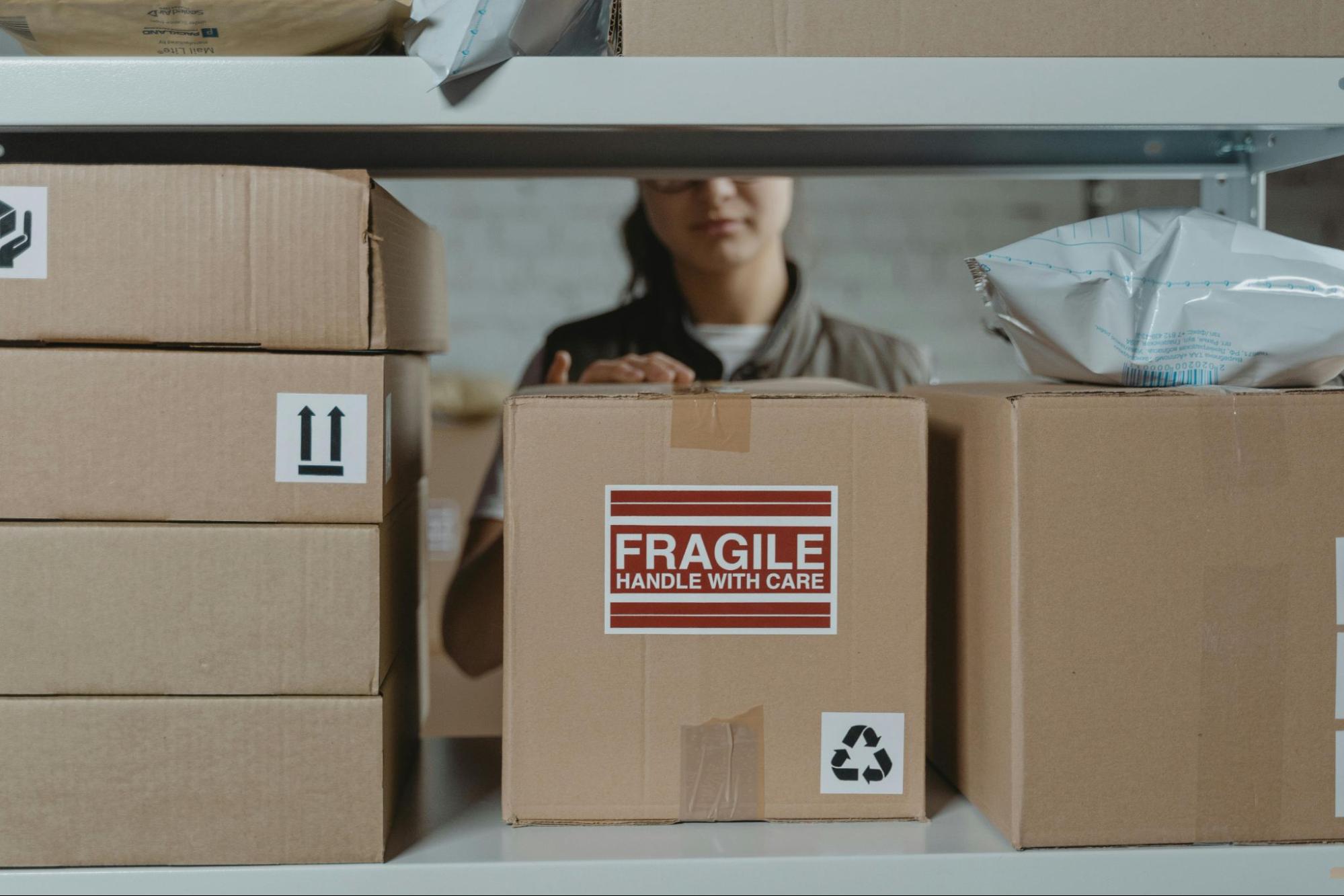
If you don’t do it in-house, your company can outsource its order fulfillment operations to a 3PL, such as AMS Fulfillment. Your fulfillment partner will manage the entire order fulfillment process for you, including storing your inventory in their warehouses and picking, packing, and shipping orders directly to your customers.
As with in-house fulfillment, there are unique advantages and disadvantages of outsourcing fulfillment to a 3PL.
Pros of Outsourced Fulfillment
When you outsource order fulfillment, your business can enjoy various benefits.
1. Scalability
With outsourced fulfillment, your 3PL partner can easily handle seasonal fluctuations, larger-than-usual influxes of orders, and business growth without having to invest in additional infrastructure and staffing.
2. Cost Efficiency
Using a 3PL service for fulfillment means eliminating costs that used to be fixed at a high price, no matter how many (or how few) orders you fulfill. With outsourced fulfillment, you pay only for warehouse space and services as needed.
3. Geographic Reach
A 3PL provider generally has multiple fulfillment centers, which means they can ship orders nationwide less expensively and more quickly.
4. Expertise and Technology
Partnering with a 3PL allows you to leverage that company’s specialized, deep supply-chain knowledge, established systems, advanced technology, and relationships with major shipping carriers.
5. Time to Focus on Your Core Business
With logistics and the bulk of staffing off your plate, thanks to outsourced fulfillment, you’ll have both the time and resources to concentrate on business strategy, including product development, sales, and marketing.
6. Reduced Overhead
Outsourcing your fulfillment process allows your company to eliminate warehouse leases, equipment purchases, and staffing headaches. By leveraging outsourced warehousing, you avoid the need for your own warehouse space and related expenses. Your 3PL stores your inventory, processes your orders, and scales with demand.
7. Shipping Discounts
Signing up with a 3PL service enables your company to benefit from their existing relationships and negotiated rates with all major shipping carriers. The 3PL can offer dramatically lower shipping rates because they:
- Have a massive order volume from various clients, allowing them to secure bulk discounts on shipping through negotiated carrier rates
- Can consolidate shipments
- Strategically store inventory in multiple warehouses
- Use advanced technology to optimize shipping routes
Cons of Outsourced Fulfillment
Despite the many benefits, you should be aware of a few downsides to outsourced fulfillment.
1. Less Direct Control
Letting a 3PL handle your order fulfillment means you’re giving up some of your direct control over the process, so you have to rely on the 3PL provider for quality control, inventory management, and customer experience.
2. Potential Communication Gaps
When you first partner with a 3PL provider, there may be an adjustment period while you align your processes and expectations. During this time frame, you could experience communication hiccups.
3. Variable Costs
While you were once accustomed to paying the same fixed costs every month, you’ll pay variable costs when a 3PL handles your order fulfillment. Per-order and storage fees can add up, especially if your inventory moves slowly.
4. Customization Limitations
Some of the control you may have to relinquish is over special packaging or unique handling requests. Some 3PLs have limitations on this kind of customization.
5. Onboarding Time
As with any change, there will be an adjustment period, during which you’ll go through onboarding with your 3PL partner. Initial setup, integration, and inventory transfer require coordination and time.
6. Dependency
After you’ve grown accustomed to working with a 3PL for outsourced fulfillment, your business will likely grow dependent on the company’s performance and reliability. If the need should arise to return to in-house fulfillment, it will require a significant investment in time, effort, and resources.
When Should Your Business Consider Outsourcing Logistics?
To determine when or if your company should outsource its entire order fulfillment process, stakeholders should look for the following signals and consider the holistic picture.
Growth Indicators
If your business is outgrowing its current warehouse or facility space, having difficulty meeting customers’ expectations regarding shipping and delivery time, or experiencing challenges scaling, these are all indicators of significant growth.
Order Volume Thresholds
Typically, outsourcing fulfillment becomes the most cost-effective option when you’re bringing in 50–100 orders per day or 1,500–3,000 per month.
Geographic Expansion
When your customer base spreads beyond the shipping zones you’ve deemed economical, it’s time to look into outsourcing fulfillment. One of the key advantages is access to global shipping capabilities, which makes it easier to expand internationally and reach customers worldwide.
Seasonal Peaks
If major seasonal peaks, such as holiday sales or back-to-school time, exceed your company’s capacity, it’s smart to consider partnering with a 3PL like AMS Fulfillment, which scales easily with you as your order volume fluctuates with the seasons.
International Growth
Many companies gain a global audience, sometimes overnight, thanks to social media virality. Expanding to a new, international market requires having a local fulfillment presence, which a 3PL can provide for you.
Resource Allocation
Some managers love rolling up their sleeves alongside their employees and getting to work. However, when your founder or upper management is spending more time in the trenches, helping with fulfillment by necessity rather than choice, they can’t focus on growth activities.
Complexity Factors
Business operations are becoming more complicated by the day. Maybe you have a growing number of SKUs, your company has just started offering subscription boxes, or you’ve dipped your organizational toes into omnichannel selling on marketplaces like Amazon or Shopify. The more complex your operations, the more likely your business will benefit from outsourcing fulfillment.
Shipping Costs
If shipping charges are taking a large bite from your profit margin, remember that 3PLs negotiate the lowest possible rates with all the major shipping carriers. These savings get passed on to your company when you outsource fulfillment to them.
How To Choose Between In-House and Outsourced Fulfillment
If you’ve noticed any of the above signals, it’s time for a deeper look into your company’s operations to decide whether in-house or outsourced order fulfillment is a smarter choice.
Cost Analysis Considerations
Calculate how much your company pays monthly for:
- Rent
- Utilities
- Staff wages and benefits
- Business insurance
- Equipment
- Technology
- Software
- Shipping supplies
A thorough cost analysis helps identify opportunities to save and reduce costs through outsourcing. You should also factor in opportunity cost, which is the time and attention management spends on fulfillment instead of strategy and growth. Compare your figures against outsourced fulfillment pricing models by looking at:
- Storage per pallet or bin
- Picking and packing fees per item or order
- Shipping costs, which are usually negotiated and therefore lower than regular rates
- Special service charges
- Setup fees
Cost savings can be achieved by outsourcing fulfillment, but a total cost analysis should include all fees, not just picking and packing, to ensure you accurately assess the potential to save costs and reduce costs.
Your break-even point (BEP), inventory turnover rate, and volume thresholds are also crucial metrics to consider as part of your fulfillment cost analysis.
Operational Assessment
You should also conduct an operational assessment. A deep, data-driven review of your organization’s daily functions, processes, people, and technology will provide valuable insight.
Evaluate your current pain points, such as order accuracy, shipping speed, inventory management, or return management. Gauge your team’s core competencies. Is logistics one of your company’s strengths, or should you hand that off to a 3PL so you can focus elsewhere?
Technology integration and real-time visibility are essential for efficient fulfillment operations. Your fulfillment partner should ensure seamless integration with your e-commerce platform and provide real-time visibility into orders and inventory. Consider the technology requirements and integration capabilities. Seamless integration via APIs is essential for connecting with your eCommerce platform and syncing inventory, orders, and customer data automatically. Do you use a Warehouse Management System (WMS)? If not, can you continue to handle fulfillment effectively without it?
It’s also essential to review your company’s shipping zone analysis to determine where the bulk of your customers are located and how quickly they expect delivery.
Hybrid Fulfillment Options
Another option is hybrid fulfillment, which uses both in-house and outsourced fulfillment to optimize your inventory, speed up delivery, and still cut costs. This method combines control with outsourcing, giving you the best of both worlds.
Some common hybrid fulfillment arrangements include:
- Keeping some inventory in-house while outsourcing overflow or specific product lines
- Allowing a 3PL to pick, pack, and ship standard products while your company handles custom or specialty items internally
- Adopting a regional strategy, in which you handle fulfillment for your primary market in-house and outsource it for more distant areas
In-House vs. Outsourced Fulfillment: Which Is Right for You?
Both in-house and outsourced fulfillment have benefits and drawbacks regarding costs and logistics. The correct choice depends on your company’s order volume and budget, as well as which areas of operation you want to control directly and various other factors. Outsourced fulfillment can provide a competitive advantage by allowing your business to maintain a competitive edge through the expertise of logistics professionals.
If you’re curious about outsourced order fulfillment, AMS Fulfillment can help. We are a top-tier omnichannel fulfillment services provider. Our team of experts will work closely with your brand to collaborate, advise, and implement solutions that allow your business to meet its goals.
For more information about how AMS Fulfillment can help your company, contact us today.
Frequently Asked Questions
Can I switch from outsourced fulfillment back to in-house if needed?
Yes, though it requires planning. Most 3PL contracts have termination clauses (often 30-90 days’ notice). You’ll need to secure warehouse space, hire staff, and implement systems before transitioning inventory back. Many businesses find that hybrid models work better than complete switches.
Will outsourcing fulfillment affect my customer satisfaction?
Not if you choose the right partner. Reputable 3PLs maintain high accuracy rates (99%+) and can often ship faster due to strategic warehouse locations. Ensure your 3PL can accommodate your packaging and branding requirements to maintain consistency.
How long does it take to set up outsourced fulfillment?
Initial setup typically takes 2-6 weeks, depending on complexity. This includes contract negotiations, system integrations, inventory transfer, and testing. Plan ahead for busy seasons and allow time for a parallel run to ensure smooth operations before fully transitioning.