

People often use shipping and mailing services interchangeably, as they both involve moving goods from one point to another. But they aren’t the same.
This guide reveals their differences (plus their average costs). You’ll also learn how working with a fulfillment partner like AMS Fulfillment helps you reduce your transportation costs without sacrificing speed or carrier reliability.
Table of Contents
- What Are Shipping and Mailing Services?
- Types of Shipping and Mailing Services Available
- How Much Do Shipping and Mailing Services Cost?
- What Should Businesses Consider When Choosing Shipping Services?
- How Can a Fulfillment Partner Optimize Your Shipping Costs
What Are Shipping and Mailing Services?
Shipping is the process of moving parcels (small to medium-sized packages) or freight (large, bulky shipments) from a seller to a buyer using commercial courier services. Meanwhile, mailing involves sending documents or parcels via the postal service.
Both services are what make B2B and B2C eCommerce actually work in the real world. When a customer places an order online, the transaction is digital. But the product isn’t. Shipping and mailing services move that physical item from a seller’s warehouse to a pickup center (or the customer’s doorstep).
Here’s a quick shipping vs mailing comparison:
| Feature | Mailing | Shipping |
| Provider | National postal services such as USPS in the U.S. and Royal Mail in the UK | Private-sector commercial carriers like FedEx, UPS, and DHL |
| Type of product transported | Letters, documents, and small, light-weight items | Lightweight items and large, bulky products |
| Different service levels (standard, expedited, overnight, international) | Yes | Yes |
Types of Shipping and Mailing Services Available
There are several types of shipping and mailing services. Modern shipping platforms offer convenient, hassle-free ways to send mail and schedule pickups, helping businesses save time and streamline their shipping processes. Each one is suitable for specific situations. By creating an account on a shipping platform, users can access valuable resources, order essential supplies, and efficiently manage their shipments. When you understand the options available, it’s easy to choose the service that best fits your needs.
Parcel Shipping Services
Parcel shipping is the transportation of small, light products typically under 150 pounds per item. It’s the go-to option for most eCommerce retailers and direct-to-consumer brands because the service fits most orders they ship to customers every day.
Major carriers that offer parcel shipping include USPS, UPS, and FedEx. They also provide real-time tracking so customers can check the location of their packages throughout the delivery process.
Freight Shipping Services
Freight shipping is the transportation of large, heavy shipments, usually anything over 150 pounds, that are too big or bulky for regular parcel services. When shipping freight on land, you can choose between less-than-truckload (LTL) and full truckload (FTL).
LTL is for shipments that are larger than a parcel but not big enough to fill a whole truck. Rather than sending a half-empty truck to a destination, the carrier combines multiple shipments from different businesses into one truck, so they all share the space and cost.
FTL, on the other hand, is for shipments that are large enough to fill a truck. In this case, the vehicle is dedicated solely to your cargo, which speeds up delivery since there are no stops to pick up other businesses’ shipments. The downside is that if the truck isn’t fully loaded, your shipping cost per unit can rise significantly.
Mailing Services
The USPS offers several mailing services with different delivery timelines:
| USPS Mail Service | Delivery Timeline |
| Priority Mail Express | One to three days |
| Priority Mail | Two to three days |
| First-Class Mail | One to five days |
| USPS Marketing Mail | Three to ten days |
Businesses often use mailing services for direct mail campaigns, sending promotional materials like postcards straight to customers.
If you’re sending them in bulk, organizing your mail by destination, such as ZIP codes or carrier routes, before it goes to the USPS can earn you presorting discounts. This can help reduce your mailing costs.
Specialized Services
Specialized services include:
- Temperature-controlled shipping for perishable products
- White-glove delivery for fragile or highly valuable items
- Same-day or rush delivery for urgent shipments
- Customs clearance and documentation for international shipping
How Much Do Shipping and Mailing Services Cost?
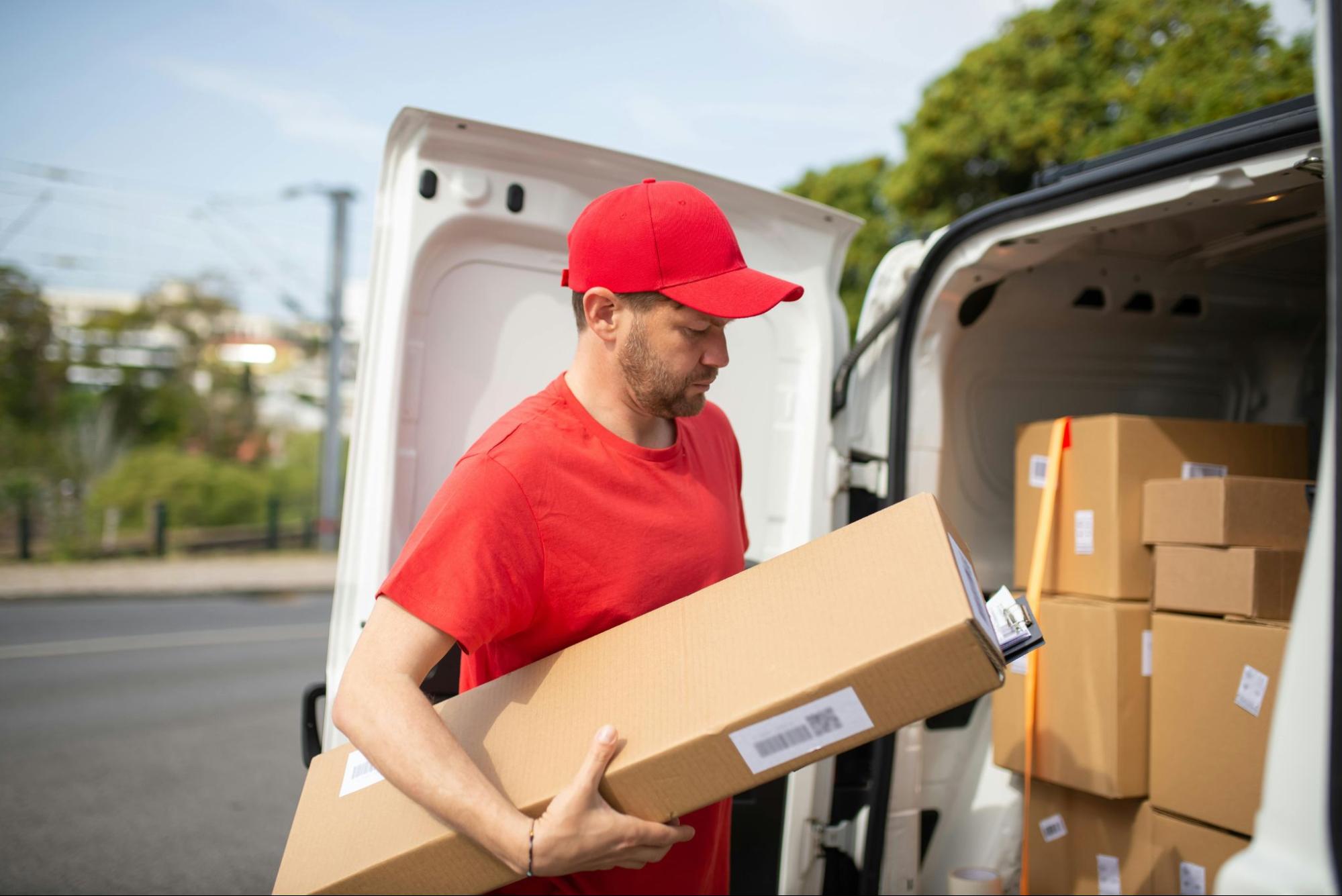
Understanding the average shipping and mailing costs gives you a rough idea of how much you should expect to spend.
Average Cost Ranges
For domestic parcel shipping, expect to pay anywhere from $5 to $50, depending on the package’s size, weight, and delivery speed. Freight shipping is more expensive; LTF can range from $100 to over $1,000 based on distance and pallet count.
International shipping can range from $25 to over $200, plus additional customs fees.
When mailing in bulk, you can save quite a bit. Presort and volume discounts can reduce your mailing costs by 15% to 40%.
Hidden Costs to Consider
Beyond the base shipping rate, extra charges that can catch you off guard include:
- Packaging materials and labor costs
- Address correction fees
- Residential delivery surcharges
- Oversized or overweight penalties
- Return shipping costs
- Storage fees for packages held in the carrier facility
Key Factors Affecting Shipping Costs
Instead of charging a flat fee for all deliveries, shipping companies determine costs based on the following main factors:
- Package weight and dimensions: Carriers charge based on either the actual weight or the dimensional weight (how much space the package takes up), whichever is greater.
- Distance and shipping zones: Shipping companies calculate prices using zones from the origin to the destination. The farther the package travels, the higher the costs.
- Delivery speed: Expedited services like same-day and overnight shipping are more expensive than standard options.
- Carrier selection: Each carrier has different pricing. Rate shopping can help you choose the most affordable shipping company.
- Additional services: Extras like signature confirmation, insurance, and Saturday delivery add to the final shipping price.
- Fuel surcharges: Carriers usually apply fluctuating fuel expenses to their charges, which influence your professional shipping costs.
What Should Businesses Consider When Choosing Shipping Services?
Here’s what to consider to choose a shipping service that fits your needs:
Customer Expectations
What do your customers prioritize? Speed, low cost, flexibility, or guaranteed delivery times? Once you know what matters the most to them, choose shipping services that meet those expectations without breaking the bank.
Cost vs. Speed Trade-Offs
Not every shipment needs overnight delivery. And paying for speed when it isn’t necessary can eat into profit margins. To find the perfect balance, companies should weigh customers’ required delivery time against the cost difference between standard and expedited shipping services.
Carrier Reliability
Your carrier’s performance directly impacts customer satisfaction in your business. The most reliable shipping company has delivery guarantees. Additionally, it has a responsive customer support team that helps resolve shipping issues quickly.
Geographic Coverage
Select a carrier that covers your target zones locally, nationally, or internationally. That way, you can deliver products wherever your customers are located.
Integration Capabilities
Does the carrier’s software integrate smoothly with your tech tools? Good integration reduces manual work. For example, when integrated with your warehouse management system (WMS) and eCommerce platform, the carrier’s software can automatically generate and print shipping labels as soon as an order is ready, so you don’t have to do it manually.
Tracking and Visibility
Carriers that provide real-time tracking information enable customers to see exactly where their orders are throughout the shipping process. Live updates make it easy for support teams in businesses to respond quickly, such as sending a delivery confirmation or a late delivery notification.
Returns Management
When customers have issues with delivered products, a shipping company with a simple, cost-effective reverse logistics process streamlines the overall shopping experience.
Packaging Requirements
Each carrier has its own rules regarding the type, strength, shape, and size of the packaging material. Understanding these guidelines in advance ensures your products aren’t rejected for improper packing and keeps them safe during shipping.
Volume Discounts
If you choose a shipping service with volume discounts, you can negotiate lower rates based on the quantity of your shipments. These discounts can add up quickly to reduce your shipping costs.
Insurance and Liability
When choosing a shipping company, check their insurance policies to understand liability limits and how they process claims. Carriers that offer adequate coverage protect you if shipments are lost, stolen, or damaged in transit.
How Can a Fulfillment Partner Optimize Your Shipping Costs?
Besides handling picking and packing or shipping on your behalf, a fulfillment partner like AMS can reduce your shipping costs in many ways.
- Carrier negotiations: Fulfillment partners consolidate shipping volume across clients, giving them leverage to secure discounted rates and favorable terms from major carriers.
- Rate shopping technology: Automated systems compare multiple carriers and service levels in real time, selecting the most cost-effective option for each shipment.
- Zone skipping: Fulfillment partners can consolidate and ship packages with the same destination and transport them as a single shipment to a fulfillment hub nearest to the final destination. This reduces transit distances and is more cost-effective than shipping each product separately.
- Packaging optimization: Fulfillment centers choose right-size boxes and use efficient packing methods to cut dimensional weight charges and material costs.
- Shipping software integration: Seamless connection with e-commerce platforms and WMS automates shipping label creation and speeds up batch processing, reducing labor costs and errors.
- Analytics and reporting: Data-driven insights into shipping patterns, costs, and exceptions help businesses identify savings opportunities and optimize fulfillment strategies.
- Returns processing: Efficient reverse logistics ensures quick handling of returns, reducing costs and maintaining customer satisfaction.
- Multi-carrier solutions: Access to multiple carriers without separate accounts provides flexibility, competitive rates, and backup options for service disruptions.
- Bulk mailing expertise: Presorting services can help you secure postal discounts for marketing campaigns, so you save money on high-volume mailing.
- Scalability: Fulfillment partners can handle seasonal spikes and growth without additional infrastructure investment, keeping shipping costs manageable.
Reducing Shipping and Mailing Costs
Shipping and mailing services enable eCommerce by delivering parcels or freight to customers. Costs vary depending on package size, delivery speed, and carrier.
A fulfillment partner like AMS makes shipping and mailing more affordable by negotiating better rates and optimizing logistics in the supply chain. Talk with a fulfillment expert and see how we can help reduce your shipping costs.
Frequently Asked Questions
How can I reduce my business’s shipping costs?
Negotiate carrier rates, optimize packaging, and consider zone-skipping (shipping multiple packages with the same destination as a single shipment). Working with a fulfillment partner can also secure volume discounts. Most importantly, always compare carriers to choose the most cost-effective option without compromising reliability.
How do fulfillment centers help with shipping and mailing?
Fulfillment centers handle storage, picking, packing, and shipping, often at better carrier rates. They use automation and multiple warehouse locations to reduce costs and transit times, freeing you to focus on growing your business instead of daily shipping tasks.
What shipping speed should I offer my customers?
Businesses often offer economy (five to seven days), standard (three to five days), and expedited (one to two days) shipping options. Survey your customers to understand their preferences and willingness to pay for faster delivery.


